From a Foot Massager’s Perspective: How Many Steps Should You Walk Each Day for Good Health?

Regarding health, there is a question that almost everyone has searched:
How many steps should you take each day to be good for your health?
As more and more people begin to pay attention to foot care, this question has also taken on a new dimension—
if you walk a lot of steps every day, do you need to use a foot massager? How should you balance your step count and foot recovery?
This article won’t simply give you a “standard answer,” but will systematically analyze, from the perspectives of health research, real-life pace, and foot burden management,
how many steps a day is more reasonable, and the real role that a foot massager plays in this process.
1. How many steps should you walk each day to be healthy? Why is there no single, universally accepted answer?
If you’ve done your research, you may have noticed that
the recommended number of steps from different sources is not entirely consistent.
Some say 8,000 steps, some emphasize 10,000 steps, and some studies suggest that 6,000–7,000 steps are sufficient.
This difference is not surprising.
better.”1. Health benefits are not necessarily “the more, the better”.
Numerous studies have demonstrated that walking has positive effects on cardiovascular health, metabolism, and mental well-being.
However, it also points out that:
- Health benefits tend to level off after a certain period.
- Excessive walking may actually increase the burden on the lower limbs.
“protest.”The feet and ankles, in particular, are often the first to “protest”.
2. Significant differences exist in age, physical strength, and lifestyle.
People in their 20s who sit at a desk for long periods of time have a completely different tolerance for the “appropriate number of steps” compared to people in their 50s who need to stand for long periods of time.
This is why a single step count standard is difficult to suit everyone.
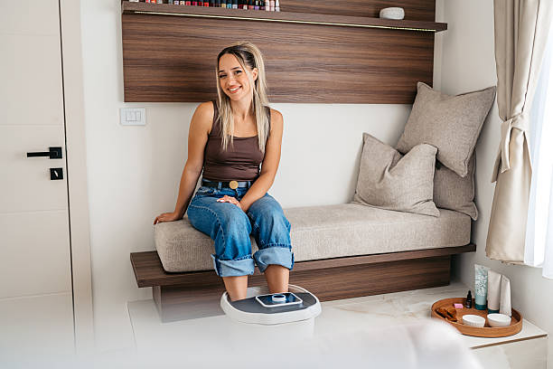
II. From a health perspective: Reasonable step count ranges for different groups of people
Combining mainstream health research with real-life pace allows for a more realistic division of step count intervals.
6000–8000 steps: Basic health benefits range
For most adults, this range is already sufficient:
- Improve cardiopulmonary function
- Promote blood circulation
- Reduce the health risks associated with prolonged sitting
If your daily activities mainly consist of commuting and light exercise, this range is relatively safe and sustainable.
8000–10000 steps: Active activity zone
This range is usually suitable for:
- People with high activity levels
- People who consciously engage in daily exercise
- People who want to boost their metabolism
However, it is important to note that foot fatigue management becomes crucial starting from this point.
More than 10,000 steps: the area where consciousness needs to be restored.
Walking more than 10,000 steps does not equate to being “unhealthy,” but it certainly places higher demands on the body.
Without recovery measures, the following can easily occur:
- Foot soreness
- Heel discomfort
- Tightness in the calves
- walking efficiency decreased
This is precisely the stage where foot massagers begin to demonstrate their value.
3. Does your foot really get “used” to walking more?
day;Many people have an intuition:
“I walk so many steps every day, my feet should be used to it.”
However, from the perspective of body structure, this adaptation is limited.
1. The foot is the weight-bearing endpoint, not the cushioning endpoint.
No matter how many steps you take, the final impact will be released through the soles of your feet.
Shoes can cushion some of the impact, but they cannot completely eliminate it.
The pressure that has accumulated over a long period of time still needs to be released.
2. Fatigue does not disappear automatically; it can only be delayed.
When fatigue is not addressed promptly, it often doesn’t “disappear,” but rather manifests itself in the following ways:
- The next day my legs felt even heavier
- walking efficiency decreased
- Discomfort appeared early
This is why more and more people with high step counts are starting to pay attention to foot massagers.
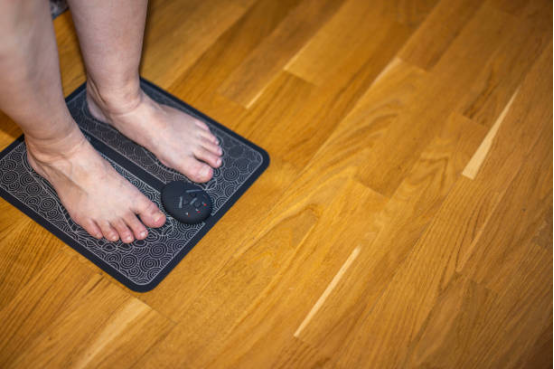
IV. What is the actual role of Foot Massager in “Health Steps”?
One point needs to be clarified here:
A foot massager isn’t meant to make you walk more steps but to help you recover better with a reasonable number of steps.
1. Help the feet to exit the “weight-bearing state.”
Foot massage devices work on the muscles and fascia of the feet through kneading, rolling, or air pressure to help them relax.
This relaxation is the starting point for recovery.
2. Improves circulation and accelerates fatigue metabolism.
Regular stimulation helps to:
- Promote local blood flow
- Reduce the accumulation of fatigue substances
- Shorten recovery time
This is especially noticeable for people who take a lot of steps every day.
3. Reduce nerve sensitivity to discomfort
Moderate massage can also regulate nerve feedback, preventing foot discomfort from being amplified.
5. Do all people with different time signatures need a Foot Massager?
Do I still need a foot massager if my step count is below 6000?
Even if you have a low daily step count, your feet may still feel stiff if you sit for long periods of time.
In this case, the foot massager’s role is more about relaxation and activation.
For those who walk 8,000–10,000 steps, regaining consciousness is especially important.
People in this range often feel “just right,” but their feet are already starting to bear a noticeable burden.
Regular use of a foot massager can help prevent long-term fatigue buildup.
With over 10,000 steps, foot recovery is almost indispensable.
If you consistently walk a high number of steps every day but lack foot recovery, you can easily fall into a cycle of “getting more and more tired as you walk.”
VI. How to integrate Foot Massager into your daily walking routine?
The truly effective methods are often not complicated.
- Use after a day’s activities
- 15–30 minutes each time
- Low to medium intensity
- The goal is relaxation, not stimulation.
Only if recovery is done well will the step count be meaningful.
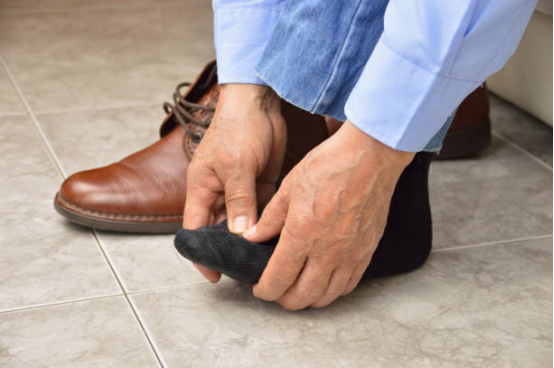
FAQ: Frequently Asked Questions about Daily Steps and Foot Massager
Q1: Do I need to walk 10,000 steps a day to be healthy?
Not necessarily. For many people, 6,000–8,000 steps are enough.
Q2: Will using a foot massager hurt my feet if I walk a lot?
Generally, it won’t hurt them under reasonable intensity; in fact, it can help with recovery.
Q3: Will a foot massager help me walk more steps?
It won’t improve physical fitness, but it can help you recover better.
Q4: How often should it be used?
People with high step counts can use it daily, while people with low step counts can use it as needed.
In conclusion, health is not just about “how many steps you take,” but also about “how you recover.”
If you only look at the number of steps, it’s easy to overlook a crucial issue:
whether the body has enough recovery time.
From this perspective:
The value of a foot massager lies not in increasing your step count, but in making walking easier and more sustainable within a reasonable step count range.
Finding your own step range and combining it with appropriate foot recovery methods is the only way to truly benefit your health in the long run.