Self-help for plantar fasciitis: A scientific approach to using Foot Massager for rehabilitation.

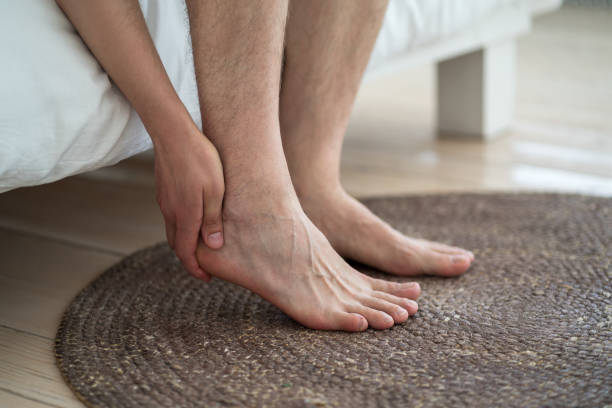
If you’re repeatedly searching for “what to do about plantar fasciitis,” “heel pain when getting out of bed in the morning,” or “does a foot massager help with plantar fasciitis,” then it probably means one thing:
Your feet are no longer just “tired” but are entering a state of chronic injury.
Plantar fasciitis is not a serious disease that requires surgery, but it is often one of the most “torturous” problems.
This is not because it is extremely painful, but because it recurs, recovers slowly, and is difficult to resolve in one go.
The problem is:
If used correctly, it’s an accelerator.
Used incorrectly, it could become a latent cause of recurring episodes.
The purpose of this article is to explain this matter thoroughly.
1. Where exactly does plantar fasciitis “injure”?
In many non-professional contexts, plantar fasciitis is simply understood as “inflammation of the soles of the feet.”
However, from a medical and rehabilitation perspective, this understanding is incomplete.
1. The true function of the plantar fascia
The plantar fascia is a thick, strong band of connective tissue that extends from the heel to the base of the toes and is primarily responsible for:
- Support arch structure
- Absorb impact while walking and running
- Transmit power from the hindfoot to the forefoot
In other words, it works with every step you take.
2. Plantar fasciitis is not always “inflammation.”
Numerous studies and clinical observations have found that many patients with chronic plantar fasciitis:
- Inflammation markers are not high
- More like long-term micro-damage and insufficient repair
- Accompanied by decreased fascial elasticity and insufficient blood circulation
This is why simply reducing inflammation and relieving pain cannot solve the underlying problem.
2. Why is plantar fasciitis always most painful during the first step in the morning?
This is a typical symptom that almost all patients will encounter.
The reason is not complicated:
- During nighttime rest, the plantar fascia is in a shortened state.
- Suddenly bearing weight in the morning causes rapid stretching of the fascia.
- Micro-damaged areas are stimulated instantly
This also explains an important fact:
Plantar fasciitis is most afraid of “sudden” and “excessive” onset.
This is the key logical basis for whether or not a foot massager is suitable to be used later.
III. The underlying logic of self-help for plantar fasciitis: not “treatment,” but “management.”
Among the top-ranking recovery guidelines on Google, one consensus is very clear:
Plantar fasciitis is more like a result of “load management failure.”
Truly effective self-rescue plans typically revolve around three core objectives:
1. Reduce unnecessary mechanical stress
- Reduce prolonged standing
- Avoid hard-soled, unsupported shoes
- Controlling high-impact motion frequency
2. Improves fascial elasticity and blood circulation
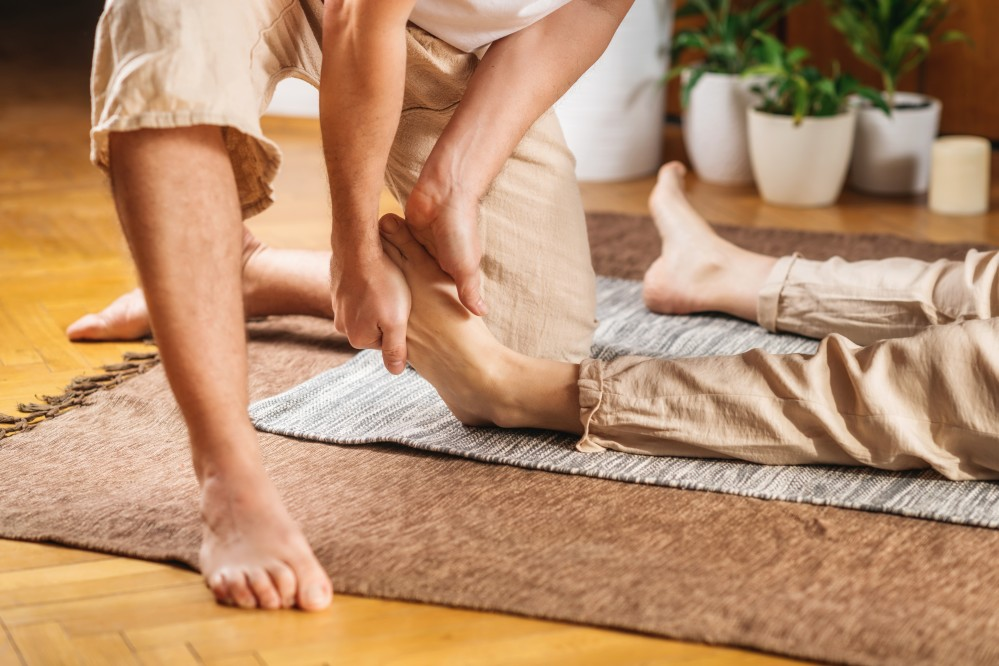
- Stretching
- Hot compress
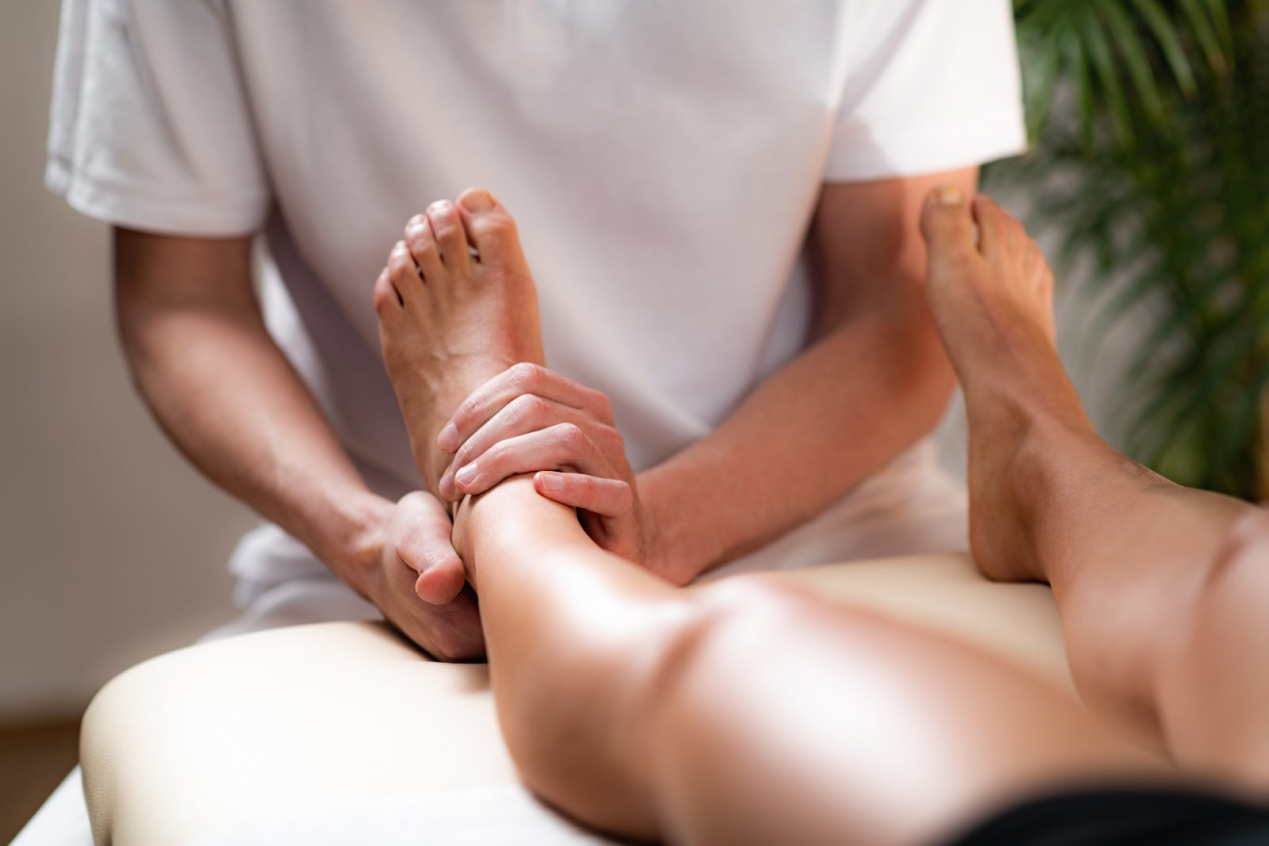
- Mild massage
3. Improve the “sustainable implementation rate.”
This is the most easily overlooked point.
No matter how scientific the method, it’s ineffective if you can’t stick to it.
This is where the foot massager comes in.
IV. The True Location of the Foot Massager in Plantar Fasciitis
One sentence must be made clear first:
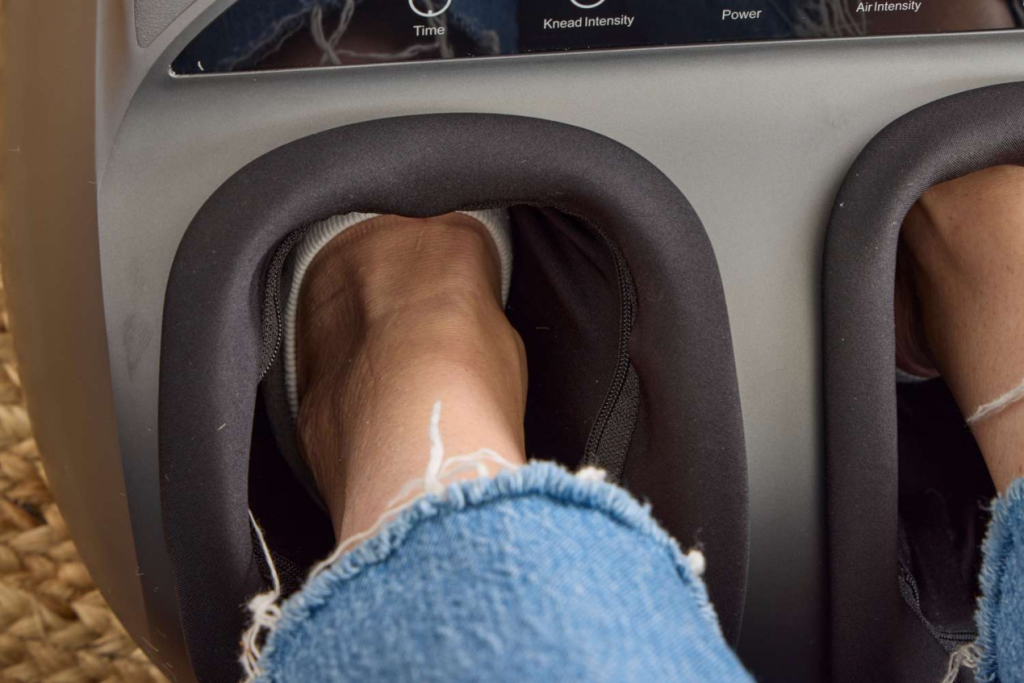
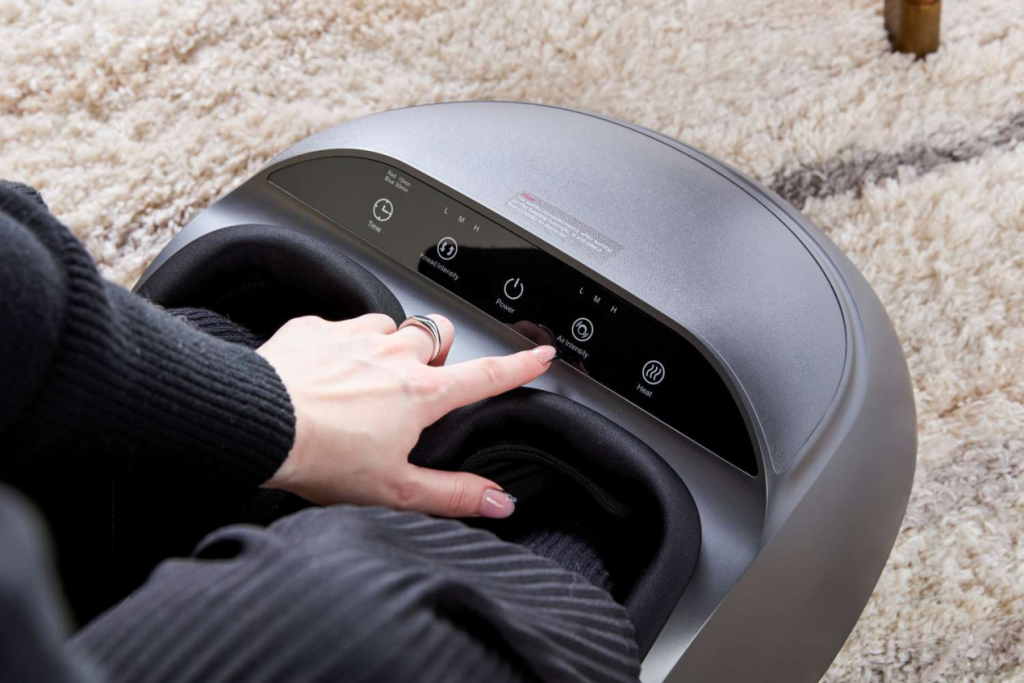
A foot massager is not a therapeutic device but a rehabilitation aid.
If we consider rehabilitation as a path, then:
- Doctor’s diagnosis = Directions
- Stretching training = core method
- Foot massager = a tool to improve performance efficiency
What can a foot massager do?
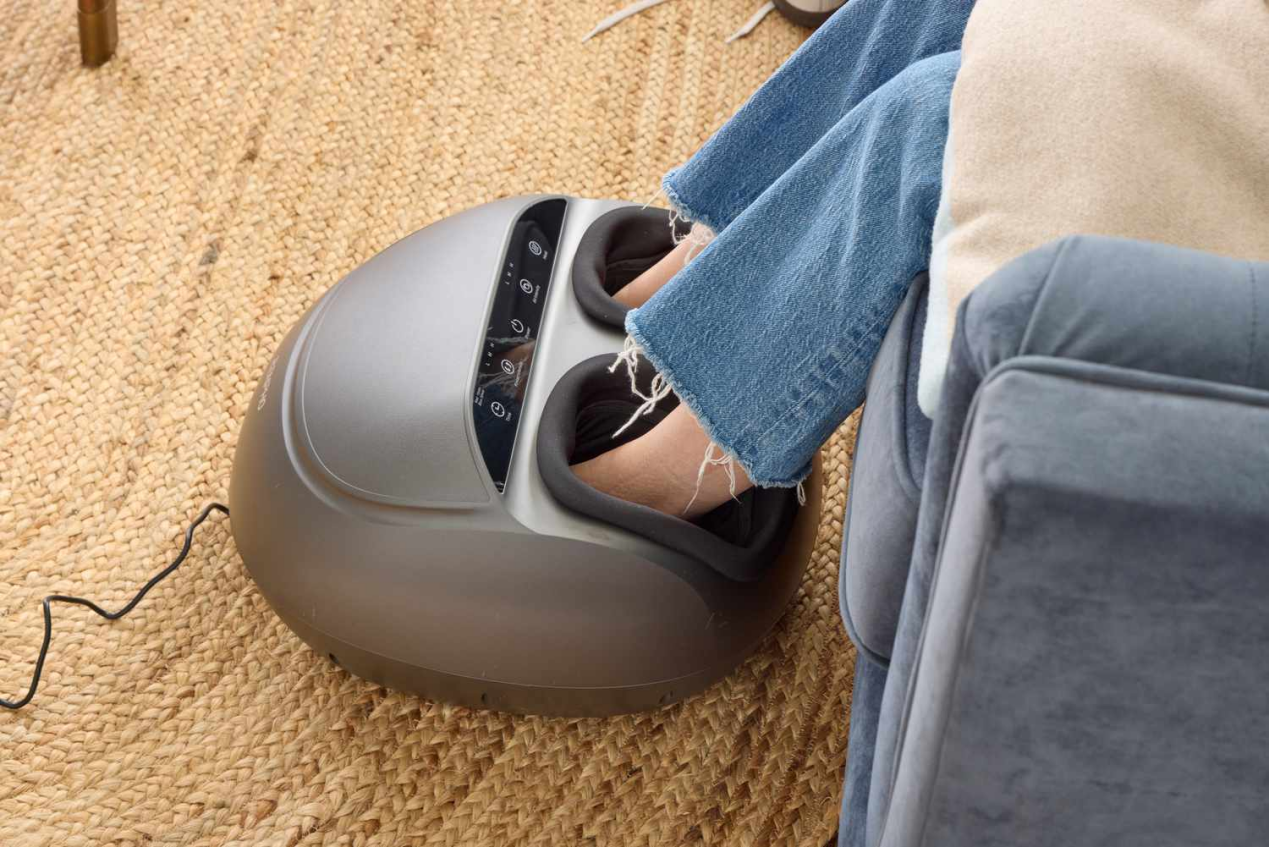
- Provide stable, repeatable stimulation
- Helps relax tense plantar fascia and surrounding muscles
- Improve local circulation to create conditions for repair.
What can’t a foot massager do?
- Unable to repair severe structural damage
- It cannot replace tension and load management
- You shouldn’t try to solve the problem by pressing on the affected area during acute pain.
V. What kind of foot massager is suitable for plantar fasciitis?
This step is crucial, but it’s also the easiest to make mistakes in.
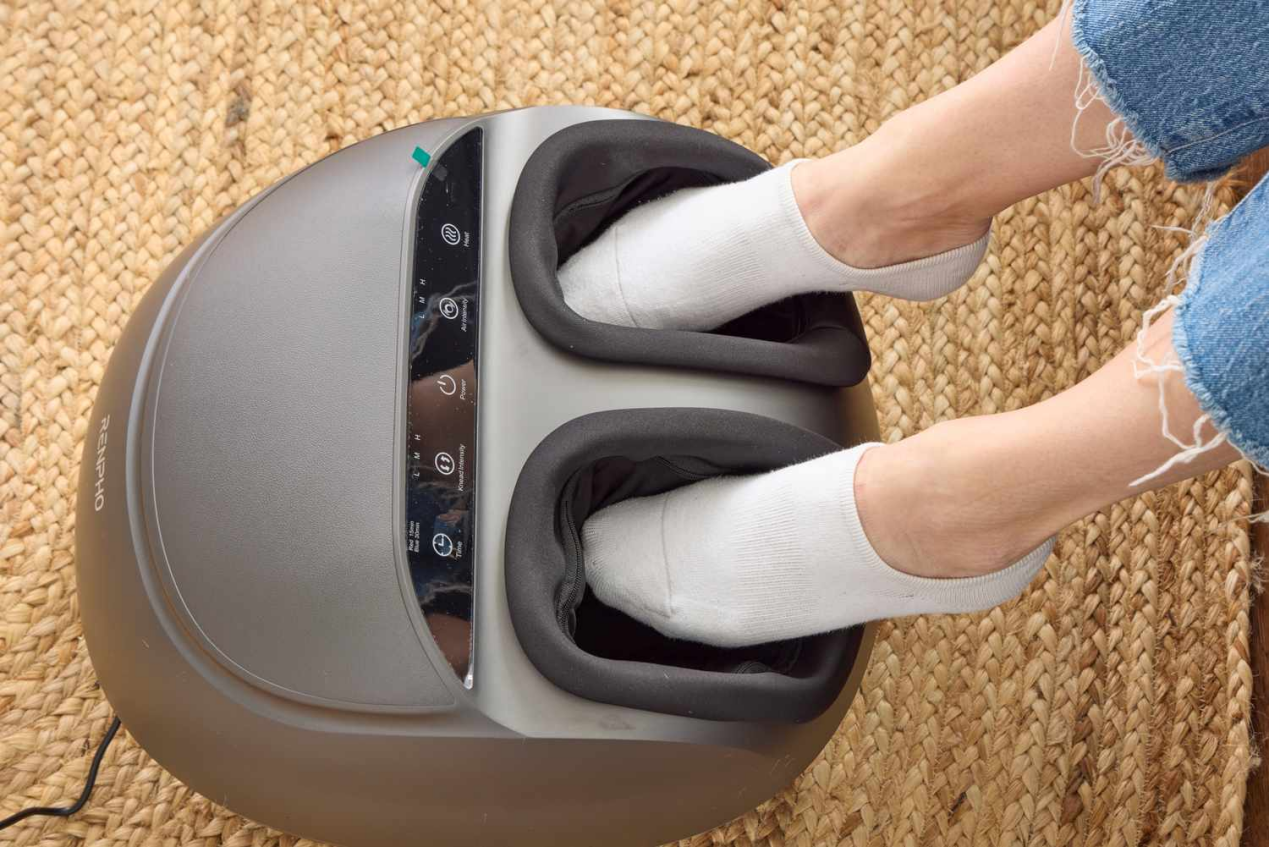
1. Adjustable intensity is the top priority.
For those with plantar fasciitis, strong stimulation should absolutely not be applied right away.
The ideal state is
- There is a low-intensity mode.
- Able to adapt gradually
- Not seeking the feeling of “pain and pleasure.”
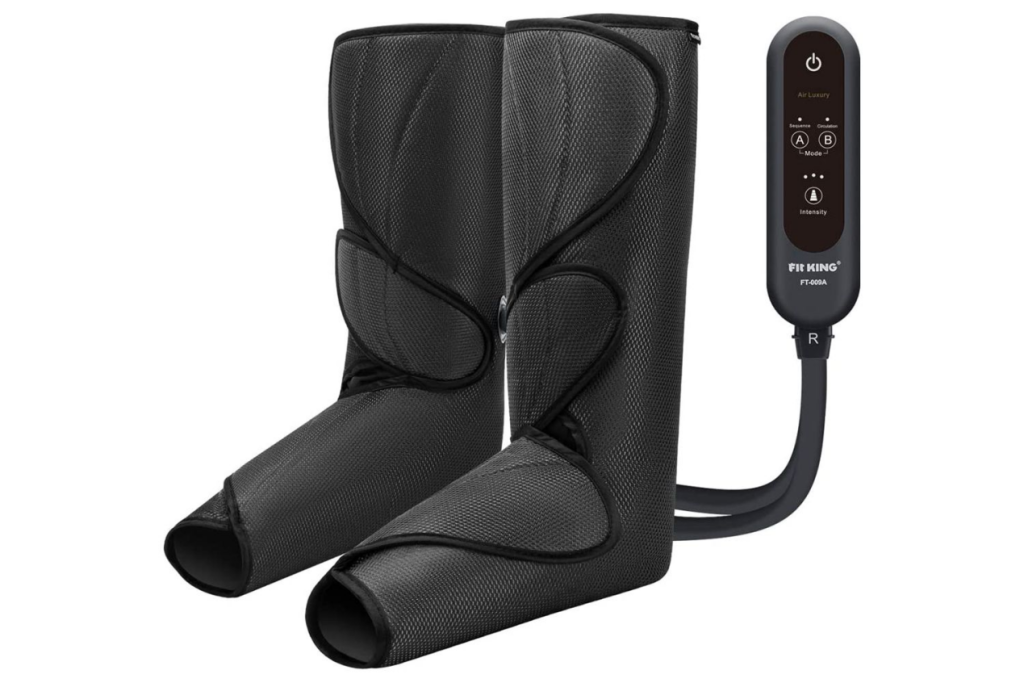
2. Rollers/Air Pressure > Intensive Kneading
From a risk control perspective:
- Roller: Closer to fascia relaxation
- Air pressure: Uniform stimulation distribution
However, excessive kneading may irritate the damaged areas.
3. Does it have a heat therapy function?
Applying heat is not necessary, but it is very beneficial for chronic recovery.
VI. Scientific Use of Foot Massager (Key Point)
This is the key part of deciding whether it will “help you recover” or “make things worse.”
Recommended usage stage
- Subacute phase
- Chronic recovery period
- Clearly acute inflammatory phase
Recommended usage frequency and duration
- Once a day
- 10–20 minutes each time
- It is not recommended to exceed 30 minutes.
Standard order of use (recommended)
- Soak your feet in warm water for 5–10 minutes
- Mild stretching of the back of the calves and soles of the feet
- Use a foot massager (low intensity).
- Avoid walking a lot immediately after finishing.
The significance of the sequence lies in first “soften,” then “stimulate,” and finally “restore.”
7. Why do some people experience increased pain after using a Foot Massager?
This is very common in user feedback, and the reasons usually include:
- Excessive strength
- Excessive usage time
- Treating pain as a signal of “effectiveness”
- Ignoring the problem of tension in the calf muscles
Remember this:
Stimulation during the recovery period should be “comfortable,” not “endured.”
8. Foot Massager + Stretching: That’s the complete solution.
Using a foot massager alone has limited effectiveness.
Highly ranked rehabilitation content almost always emphasizes:
- Calf muscles
- Achilles tendon
- Plantar fascia
It is a functional whole.
If you only massage your feet but don’t stretch your calves, your recovery will be significantly slower.
9. Who are the most suitable people to use Foot Massager to assist in rehabilitation?
Based on long-term feedback, the group of people with the most stable results includes:
- People who stand or sit for long periods of time
- Mild to moderate plantar fasciitis
- Willing to manage in the long term rather than seek quick fixes
- People who can adapt to shoes and stretch/adjust
10. Frequently Asked Questions (FAQ)
- Q1: Will a foot massager worsen plantar fasciitis?
Yes, if used improperly. - Q2: How long will it take to see improvement?
You can usually feel the morning pain lessen in 2–4 weeks, but full recovery takes longer. - Q3: Can a foot massager replace a doctor?
No, it is only an auxiliary tool.
In conclusion, truly effective self-help lies in “sustainable and correct repetition.”
The worst thing about plantar fasciitis isn’t the pain but the urge to rush to get rid of it.
The true value of a foot massager lies not in “opening it up with one press,”
Instead, it allows you to care for the recovering fascia every day in a relatively correct way.
It only truly comes to your side when you start using it as a management tool rather than a lifesaver.